
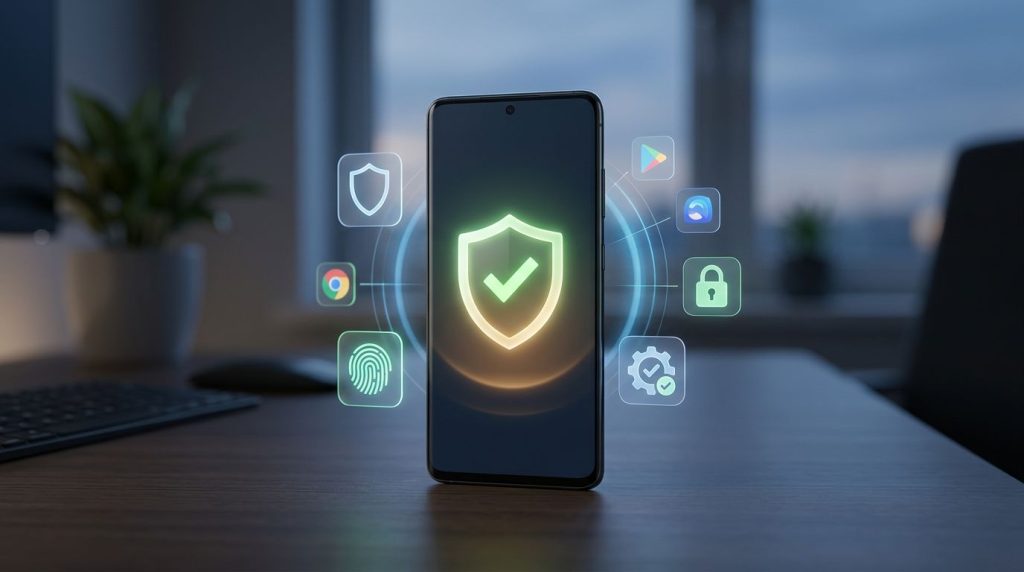
An Android phone can open the Google Play Store and still deserve a closer security review. Google Play Protect certification confirms that a device model and its software configuration met Google’s compatibility and baseline security requirements, but it remains only one layer of protection.
That distinction matters for parents, IT teams, and anyone deciding whether an app deserves access to messages, location, photos, or a work account. Certification is one of several security features that support Android security, alongside scanning, timely updates, and careful permission choices.
Use certification as a useful safety check, not a complete verdict, then make safer choices each time you install, update, or grant access to an app.
Key Takeaways
- Google Play Protect certification confirms that a device’s Android build, hardware configuration, and Google services meet a baseline of compatibility and security requirements.
- Certification does not guarantee that every installed app is safe, prevent malware, or replace timely updates, careful permissions, and cautious sideloading.
- Check certification in
Play Store > Profile icon > Settings > About; for an uncertified device, use official updates and manufacturer support rather than random APKs, rooting tools, or build-fingerprint spoofing. - Play Protect scanning is separate from device certification and can warn about harmful apps before or after installation, but users should still review warnings and investigate permissions.
- Parents and IT teams should favor transparent controls, documented device management, regular app reviews, and clear limits on access to sensitive data.
What device certification tells you
Play Protect certified devices receive a device-level status. It applies to the Android build, hardware configuration, and Google Mobile Services package installed on a phone, tablet, or other Android device.
Google evaluates certified devices through compatibility tests, security requirements, and permission requirements. The technical foundation comes from Android Compatibility Definition requirements, which set expectations for Android implementations. Certified devices should ship without pre-installed malware and include Google Play Protect.

Certification also helps a device run Google apps and Play Store services as expected. It does not certify the judgment of every app developer, every future system update, or every person using the device.
The difference is easier to see side by side:
| Question | Play Protect certified devices | Google Play Protect scanning |
|---|---|---|
| What does it assess? | A device’s Android build and compatibility with Google requirements | Installed apps to identify potentially harmful apps and behavior |
| When does it matter? | During device approval and when device integrity changes | Before and after app installation |
| What can it affect? | Play Store support and Google app functionality | Warnings, app blocking, or removal prompts |
| Is it a complete safety guarantee? | No | No |
Certification confirms a baseline at the time Google approved a device configuration. It does not make every installed app safe or keep a phone patched forever.
Why an app does not get the same certification
A listing in Google Play is not proof that an app has device certification. Apps go through Google Play review and may face ongoing Play Protect analysis, but those processes differ from device certification.
Treat claims such as “Google certified app” with care. Check the developer name, official website, privacy policy, update history, and ratings that describe real use, then inspect the app permissions.
A flashlight app whose app developer requests accessibility access, contacts, microphone access, and notification control needs more scrutiny than a simple utility should require.
How to check device certification in the Play Store
Checking the device certification status takes less than a minute on most Android phones. In the Google Play Store, use Profile icon > Settings > About in your device settings, following Google’s official certification status instructions:
- Open the app.
- Tap your profile icon in the upper-right corner.
- Select Settings, then About.
- Find Play Protect certification.
Play Protect certified devices should show “Device is certified.” If you manage an organization, capture this status during enrollment and investigate exceptions before employees add work accounts or sensitive apps.

The label is useful, but it is not a daily security score. A phone can remain certified while a user installs a risky app, ignores an update, or grants broad access. Likewise, an uncertified device is not automatically infected. It may have a modified operating system, an unsupported build, a bootloader change, or a manufacturer configuration problem.
For IT administrators, record the result alongside the device model, Android version, security patch level, management status, and access to Google apps. That gives support teams a useful trail when a device loses access to Play services.
Fixing the “device is not certified” message
The “Device is not certified” warning means Google can’t confirm that the current device configuration meets its requirements. An uncertified device may face Play Store limits, Google sign-in trouble, or blocked access to Google apps.
Start with Google’s own route: open Play Store, go to Profile icon > Settings > About > Play Protect certification, then select fix device issue if the button appears. Google’s guidance on Play Protect and certification errors makes an important point: malware scanning and certification are separate systems.
First, install the latest official system updates from the device manufacturer. Next, update Google Play Services and restart the device. These supported steps help protect Android security. If the phone is new, wait until setup and account synchronization finish before checking again.
If the status remains uncertified on an unmodified retail phone, contact the manufacturer or retailer. Do not accept a random APK, a build-fingerprint spoofing tool, or a rooting guide as a repair. Those changes can make a support issue worse and weaken the phone’s defenses.
Custom ROMs, emulators, and Google Service Framework IDs
Custom ROM users, people running an Android emulator, and test-lab administrators face a different situation: an Android image may boot and run apps while failing Google’s compatibility tests or integrity checks. The correct fix is usually an approved image, a supported custom profile, or a vendor update.
Some self-built test environments use the device registration page. For an administrator working on a device they own and control, the process involves retrieving its decimal framework ID through an approved diagnostic method, submitting that ID while signed in to the test Google account, then restarting and checking certification again.
Registration can associate an ID with an account. It cannot certify an altered consumer build, restore Google licenses, or bypass integrity checks. Never share framework IDs, borrow another device’s ID, or use software that misrepresents the device.
To refresh a stale status after a legitimate update, select clear data and cache in the Play Store’s storage controls. Then force-stop the app, reopen it, and recheck certification; managed fleets should use the device maker’s support process instead. Avoid indiscriminately clearing data and cache for Google Play Services, because that can disrupt accounts and dependent apps.
How Play Protect detects harmful apps
Play Protect provides malware protection by checking apps from Google Play and other sources. It looks for known malware, deceptive behavior, and potentially harmful apps that may steal data, abuse permissions, or alter device settings.
Its protections continue after installation because an app can change behavior in a later update. Google also warns users when it identifies a potentially harmful application. The August 2026 Android Security Bulletin is a useful reminder that monthly patches still matter alongside app scanning.

Play Protect can miss new threats, and warnings can sometimes affect legitimate software. That is why a prompt should trigger a review, not blind trust or blind dismissal.
Treat a harmful-app warning as an action item
If Play Protect flags an app, don’t override the warning merely because it promises a useful feature. Remove the app unless you can confirm its legitimacy through the developer’s real support channel and understand why the warning appeared.
- Record the app name, publisher, and warning before uninstalling if you need an IT ticket or fraud report.
- Review sensitive app permissions if the app remains installed while you investigate.
- Change passwords from a separate trusted device if the app handled banking, email, authentication codes, or work data.
- Ask an IT team to isolate a managed phone from corporate resources until it has been reviewed.
- Report an apparent false positive through legitimate developer and Google support channels, rather than downloading a replacement APK from an unofficial site.
A clean Play Protect result is reassuring, yet it does not replace good account security. Use a screen lock, keep recovery details current, and turn on multi-factor authentication for important accounts.
Safer app choices, sideloading, and privacy settings
Android app safety often comes down to one question: do the app permissions match the job the app claims to do? A map app may need location access. A note-taking app probably does not need the microphone, call logs, accessibility service, or permission to install unknown apps.
Read the full permission prompt before accepting it. Android lets users select approximate location for many apps, grant access only while an app is in use, or deny access. Review access settings after major app updates because a trusted app can add features that request new data.
Sideloaded apps deserve extra caution. Installing an APK can be appropriate in a controlled developer test or when software comes directly from a verified vendor. However, APKs from unknown sources, including social media posts, file-sharing pages, or chat messages, are not a trustworthy supply chain. Keep the Install unknown apps permission disabled for browsers and messaging apps unless there is a clear, temporary reason to enable it.
Unused apps should not keep sensitive access
Android can pause apps that you have not used for a long time and revoke some permissions. Check the list in device settings, then review whether “Pause app activity if unused” makes sense for each app. Google’s guide to managing unused Android apps explains the available controls.
The pause-and-revoke behavior is one of Android’s privacy-oriented security features. It reduces unnecessary access to location, camera, microphone, and files. Re-enable permissions only when you return to an app and still trust its publisher.
Parents and IT teams need transparent controls
Parents should choose tools that match the child’s age, family rules, and local law. Google Family Link parental controls can supervise app downloads, manage screen time, and locate a child’s compatible Android device. It provides clear family settings without relying on hidden surveillance software.
Workplace monitoring requires the same transparency. Use a phone monitoring tool only on a company-owned device, with written notice, a defined business purpose, limited data collection, and a retention schedule. Mobile device management can enforce updates, screen locks, app allowlists, and work-profile separation without accessing private conversations.
An advertised spy app for Android and iPhone that promises hidden message access, call recording, keystroke logging, or remote camera use creates serious privacy, abuse, and legal risks. The FTC’s stalkerware safety guidance explains how covert monitoring can facilitate abuse.
A “mobile hacking tool” is not parental control software, and a service labeled Pro Ethical Hackers For Hire does not authorize access to another person’s phone. Written authorization, a defined scope, and legitimate security contracts are the minimum standard for professional testing.
Avoid downloads promoted with Download Pathfinder Rat, and don’t assume directories described as Verified Tor Onion Links are safe sources for Android apps. Remote-access trojans and anonymous APK listings can expose a device to theft, extortion, or account takeover.
Keep certification useful with routine maintenance
Review system updates at least monthly, especially on devices handling work data, banking, or family accounts. Manufacturers set their own schedules, so compare support commitments before buying a device.
Also review installed apps every few months, remove unused apps, and revoke permissions that no longer fit. Even Play Protect certified devices need this care, so replace abandoned utilities with reputable alternatives.
Final thoughts
Certification confirms that an Android device met an important compatibility and security baseline. It does not certify every app or replace updates, careful permissions, and cautious sideloading.
Even Play Protect certified devices still need updates, thoughtful app choices, and regular permission reviews. App safety depends on ongoing choices, not one label in the Play Store.
FAQ
What does it mean if my Android device is not Play Protect certified?
Google can’t verify that the device’s software and configuration meet its compatibility requirements. It may have modified software, an unsupported build, or a manufacturer issue. Open the Google Play Store certification page and select fix device issue if it appears. If that doesn’t help, contact the manufacturer about an unmodified retail device.
Does certification mean my phone can’t get malware?
No. It confirms a baseline for the device, but it doesn’t prevent harmful software. Unsafe downloads, deceptive links, compromised accounts, unpatched software, and excessive access requests can still create risks.
Should I register a Google Service Framework ID to fix certification?
Only use a Google Service Framework ID through an authorized device registration page for a device you own and administer in a legitimate custom-build or test environment. Registration may associate a test framework ID with your account, but it can’t make an unsupported or altered retail build certified.
What should I do when Play Protect flags an app as harmful?
Don’t ignore the warning. Remove the app and review what data it could access. Change important passwords from another trusted device if it had sensitive access. Managed-device users should contact their IT team before reconnecting to work services.
Does Android automatically reset permissions for unused apps?
Many Android devices can pause apps and revoke certain access. Check Settings to see which apps Android has optimized. This feature reduces lingering access but doesn’t replace a manual review of sensitive access.